
“A gift economy is an economic system in which the prevalent mode of exchange is for goods and services to be given without explicit agreement upon a quid pro quo (the Latin term for the concept of "a favor for a favor")” (“Gift Economy,” 2007).
I am sure all of us have, at one point or the other, in our lives, both received and given gifts. As a matter of fact, it is probably one of the most carried out activities in one’s life. We do it all the time; we receive and give gifts on Valentine’s Day, Christmas and during birthdays. Although some of us may not even celebrate those special occasions except the latter, we still do it anyway. Why? Simple explanation for this would be because we probably anticipated that since we would be receiving gifts, it would only be right to give gifts. Alas, the rule of reciprocation states that we should try to repay another person what he/she has provided us. However, it is an unwritten law. As such, a cycle of giving and receiving becomes part of us during these times.
So, does this transaction of gifts only occur for occasions mentioned above? The answer is no. Besides the reciprocation of gifts in return for actual physical gifts, societies indulge in the giving of gifts for the return of favors. As a Roman Catholic, another kind of reciprocation I have seen quite often involves prayers. Like many other religions alike, offerings are regarded as a mean of which we give in return for certain prayers to be answered. Aside from this, a darker form of gift reciprocation could be seen in politics. Corrupt officials may sometimes receive goods and favors such as votes or money from undesirable characters in return for leniency to crimes committed by the latter.
However, a gift economy does not only occur in those mentioned above. With the dawn of technology, people now participate in such gift transactions online. Many may join online clubs which cater to an individual’s hobby. In these online forums or clubs, it is inevitable that communication between various parties occur. A good example of this would be found in students’ discussion boards. Students may sometimes feel unsure about a certain topic. Instead of consulting a teacher, they may engage in online discussion forums to seek answers from their peers. As a fellow student may have more knowledge about that certain topic, he may share what he knows with everyone in the forum. This is known as a public good which is a good that anyone can benefit from, regardless of whether they have contributed to its production (Kollock, 1999).
Although it is not necessary to return the favor in the future, it may sometimes be deemed as only right. During my previous communication module, social proof was seen as one of the tools most often used by individuals to determine how they should behave. According to Robert B. Cialdini, author of Influence: science and practice, the principle of social proof states that we determine what is correct by finding out what other people think is correct. In other words, the point put across here is that people may return the favors not because they want to but because they see others doing it and thus feel obligated to follow suit, in an effort to not be labeled as “freeloaders” or “moochers.”
As a guitarist, I find it important to expand my knowledge on different genres of music through learning and discussing it with other musicians similar to myself. With the advancement of the Internet technology, I have learned to embrace it by seeking musicians of similar interests through an online forum called Ultimate Guitar (www.ultimate-guitar.com).
In this forum, musicians interpret different songs and create their own versions of how the song should be played. As such, just one song alone could have over 100 different versions depending on how popular the song is. Besides trading the guitar tabs for various songs, members of this online forum may sometimes use it as a platform to introduce themselves and promote their bands to other online users. In this way, a vast sharing of song demos or lyrics could be circulated between members and non-members alike thus benefiting anyone alike.
As mentioned above, in a gift economy, “gifts” may be traded without the expectation of something to be returned. Members submit their personal versions of the tablature of songs not hoping that somebody else would submit something to repay them directly but because they know that they have referred to other members’ works before, which in this context, is the act of receiving “gifts.” Thus, after receiving these “gifts,” it motivates members to post works/information of their own as a form of repaying (recall: the principle of reciprocation). This creates a cycle which then keeps the forum running.
Another characteristic of a gift economy that Ultimate Guitar bears is the gaining of intangible rewards such as recognition and self-esteem. If a member contributes a good piece of tablature, it will be rated five-stars by other supporting members and thus gain recognition in the forum.
After drawing parallels between Ultimate Guitar and a gift economy, I can conclude that it is indeed an online gift economy. I strongly encourage other guitarists to join and contribute to this forum. Embrace your talents and give some “gifts” today!
References:
1) Cialdini, R. (2001). Influence: science and practice (4th ed.). Boston, MA: Allyn and Bacon.
2) Gift Economy. (2007). In: Wikipedia, the free encyclopedia. Retrieved February 9, 2007, from, http://en.wikipedia.org/w/index.php?title=Gift_economy&oldid=105681971
3) Kollock, P. (1999). The economies of online cooperation: Gifts and public goods in cyberspace. Retrieved February 9, 2007, from http://www.sscnet.ucla.edu/soc/faculty/kollock/papers/economies.htm
About Me
Saturday, February 10, 2007

Friday, February 2, 2007
QotW3:The Flaws of Laws in copyright

In the 1700s, the seas off the coast of major trading ports were terrorized by what we know as pirates who ruthlessly robbed merchant’s ships and unsuspecting towns. The concept of stealing trade goods from its rightful owners and later selling it off for profit is not just a thing of the past. Besides, experiencing such acts in the form of movies and books, a new kind of piracy has emerged over the years. Although not as violent as the robbery mentioned above, the piracies of intellectual property, rob individuals of their sense of achievement. It is because of such acts, that laws on piracy have been passed.
Before I proceed as to what could be done to accommodate the content creators and public good, it is important to look at some of the different kinds of trespasses that play a major role in exploiting the copyright laws. A major debatable issue which has erupted over the past few years would be the usage of music sharing capabilities such as “Limewire” and “Napster”. According to Oberholzer-Gee and Strumpf in their empirical analysis of “The Effect of File Sharing on Record Sales” mentions that more then 60 million Americans have downloaded music and the number of file sharers are growing. Similar to this large numbers, I too have done my own fair share of downloading, but sometimes, it does make me think, is it right to receive free music over the internet and deprive musical artistes of earning for their hard work?
To look into this, copyright laws implemented, ensures creators of intellectual property exclusive rights to their own work. According to the US constitution article 1 section 8, clause 8, the law states “To promote the progress of science and useful arts, by securing for limited times to authors and inventors the exclusive right to their respective writings and discoveries”. As seen from this constitutional law, not only are creative writings and arts protected by this, but also scientific discoveries and theories. Besides the exclusive rights to their own works, the copyright law serves as a platform to benefit the public indirectly. Why is this so? The answer is simple. Because creators benefit financially from owning the exclusive rights, it provides incentives to them to carry on creating, thus benefiting the public in the long run.
Before I proceed as to what could be done to accommodate the content creators and public good, it is important to look at some of the different kinds of trespasses that play a major role in exploiting the copyright laws. A major debatable issue which has erupted over the past few years would be the usage of music sharing capabilities such as “Limewire” and “Napster”. According to Oberholzer-Gee and Strumpf in their empirical analysis of “The Effect of File Sharing on Record Sales” mentions that more then 60 million Americans have downloaded music and the number of file sharers are growing. Similar to this large numbers, I too have done my own fair share of downloading, but sometimes, it does make me think, is it right to receive free music over the internet and deprive musical artistes of earning for their hard work?
To look into this, copyright laws implemented, ensures creators of intellectual property exclusive rights to their own work. According to the US constitution article 1 section 8, clause 8, the law states “To promote the progress of science and useful arts, by securing for limited times to authors and inventors the exclusive right to their respective writings and discoveries”. As seen from this constitutional law, not only are creative writings and arts protected by this, but also scientific discoveries and theories. Besides the exclusive rights to their own works, the copyright law serves as a platform to benefit the public indirectly. Why is this so? The answer is simple. Because creators benefit financially from owning the exclusive rights, it provides incentives to them to carry on creating, thus benefiting the public in the long run.

It is with this, that I shall discuss the main issue involved. How can we accommodate both content creators and the public? As mentioned before, many internet users have or would at one point of time use the internet to download pirated software. To some it serves as the best way to save money, for example if they want just a few songs, downloading it would be more cost effective rather than to purchase the CD itself. However, although this would benefit them, it would not benefit the creator as millions of dollars may be lost. So what technical structure can be implemented to stop the act of piracy? Copy protection also known as copy restriction has been enforced to serve as a measure to prevent the duplication of information. (Wikipedia, 07) However, software companies have been known to produce and provide a newer technology which enables individuals to avoid copy protection software. However a social structure which rebutted this was the implementation of the Digital Millennium Copyright Act (DMCA) which made it illegal for companies to provide such technologies. (Wikipedia,07).
Although many laws have come into effect, a frequent argument which many software companies make is that the way their programs are used by their users is of no problem of theirs. However, this should not be the case. As seen from the Grokster incident, it is essential that companies do not encourage users to break the copyright law. Also companies may be expected to implement features which could inhibit infringing uses according to Kevin S Brady.
With all this said, the question still lies on what measures can be taken to accommodate both parties. As mentioned above, until this point of time, it is impossible for any steps to be taken without either party feeling the brunt of it. If stricter laws were imposed on those who infringe copyright laws, the public would definitely not benefit. However, if laws were slackened, the content creators would “lose” out and in a worst case scenario as mentioned before, lose their motivation to continue creating for the public thus causing a domino effect which would not benefit anybody. It is with this inevitable circumstance that the best way which would benefit both parties would be, reduce the aim of profit making. As understood by some, aside from the profits made by the creator ie: songwriters, bands, etc. Large corporations in charge of these creators for example aim to maximize their profits further by raising prices of CDs. This as mentioned, forces individuals to turn to illegal downloading as a way to cut cost. If prices of such items were lowered, people would most likely find it reasonable to “pay to support” their favorite bands rather then pay so that corporation owners can get richer. This would also apply to other piracy acts such as illegal DVDs and VCDs.
To apply this to the practical world, a friend of mine whose band recently released a CD once said, the cost of producing a CD is probably not even half of what it is sold for. The majority of the money goes to the record label and to the shops to make profits. Besides this, I have heard numerous people mention that it is cheaper to buy two to three pirated movies, than to go to the cinemas and watch one.
In conclusion, it is impossible to make everyone happy in a rapidly growing industry where profit making is a priority. However, I feel that as a consumer it is also a necessity to understand the reasons as to why people carry on to flaunt copyright laws although strict punishments have been implemented. I believe that there is only a certain amount of technical preventions which can be created. As seen, no matter what software is created, a loophole has always been found in it. Thus it is of importance that the only real solution to this would be for both content creators and the public to understand the issues and reasons behind such piracy acts and to work on it.
References:
Brady, K.S (2004,0215). Kevin S, Brady, Attorney of the law-Copyright Myths and Misconceptions. Retrieved February 1, 2007, from Copyright FAQ: 25 Common Myths and Misconceptions Web site: http://users.goldengate.net/%7Ekbrady/copyright.html
Oberholzer-Gee, F, & Strumpf, K (2005). The Effect Of File Sharing On Record Sales. Retrieved February 1, 2007, from http://www.unc.edu/%7Ecigar/papers/FileSharing_June2005_final.pdf.
Ovalle, C (2005). An introduction to copyright. Retrieved 01,1,007, from http://sentra.ischool.utexas.edu/~i312co/1.php
(2007). Digital Millenium Copyright Act. In Wikipedia [Web]. Retrieved 01312007, from http://en.wikipedia.org/wiki/Digital_Millennium_Copyright_Act
(2007). Copyright. In Wikipedia [Web]. Retrieved 02012007, from http://en.wikipedia.org/wiki/Copyright
Saturday, January 27, 2007
Com 125 Week 2: Instant Messaging


Mankind has always had the need to communicate with one another through various means. Ever since ancient times, methods of communication have been used to convey messages over great distances. In medieval wars, smoke and light signals served as a way to communicate separated armies with one another. Similarly, messengers on horseback rode many miles to pass information to one another. As centuries went by, the development of the telephone replaced such inconvenient methods therefore making it easier to convey messages to and fro. However, it was not long before we soon discovered an easier way of communication. The discovery of the internet.
The development of the internet has changed the way society has evolved over the past few decades. Besides being able to access information from all over the world at a click of a button, communication between individuals have also benefited greatly with the usage of the Electronic mail or otherwise known as email. However, as a frequent user of the internet, I find it impossible for a day to go by without using my MSN account.
MSN was a freeware instant messaging client developed and distributed by Microsoft between 1996 and 2006 for computers running the Microsoft Windows operating system.(wikipedia,2006)However, similar to any other technological development, MSN started of from the development of instant messaging.
So what is Instant Messaging? According to sources, instant messaging also known as IM is a form of communication between two or more parties through typed text over the internet. However unlike another technological wonder; the email, instant messaging enables an individual to see if the other party is available at the present moment. Thus this made it easier to communicate with one another unlike the email.
The history of Instant messaging began in the 1970s when multi-users operating systems such as UNIX helped facilitate users logged on the same machine, the same network and subsequently the internet, communicate with one another.(wikipedia,2006) However, the instant messaging as we know it today only clearly took off when the first Instant Messaging client was created in July 1996 by four Israelis; Yair Goldfinger, Arik Vardi, Sefi Vigiser and Amnon Amir of the Mirablis company.(Albany, 2001) This soon led to the development of ICQ(aka I seek you) which was then released in November of the same year.
Although, the development of the ICQ server would probably be considered to be a main example of Instant Messaging, it was not the first. In 1981, Yale University used a network to connect itself to the City University of New York. A conferencing system called Message was part of the network (called BITNET) and allowed people to send IMs to each other. (Albany, 2001)
So how exactly does instant messaging work? Most instant messaging software contains two main components which ensure the smooth running of its communication; the client software and the server software. While client software may be sometimes found on the internet browsers, such IM programs require download. The server’s software on the other hand acts as a directory where the client’s information and data is stored. For example, if a client was to send a message to another client who was presently not online, the message would be stored and retrieved when the unavailable client logs on.
In instant messaging, besides the “to and fro” typed messages which is most often used, another wonder of it would be the ability to transfer images or videos. Similar to offline text messages, if the recipient is not online, the server software would be able to store it for the time being. Another useful feature which can be found in instant messaging, would be the usage of the “web cam” and microphone function. It is through this advancement that many corporate businesses are able to cut deals with one another without even meeting. Two companies on both sides of the globe would be able to “meet” upon a schedule time by using this new method of communication.
Ever since the early days of instant messaging, the IM service is currently one of the most important uses in the web world. According to the American Online Inc, 38 percent of online consumers send more Ims rather then emails. This being up by 19%. Probably because of this, many corporations such as AOL, Yahoo, Microsoft, ICQ and Google have found it extremely profitable to dive into.
With the development of instant messaging from a basic to fro mean of communication, to something which many rely on example: meetings, file sharing, I as a frequent user of MSN would not be able to survive without it. It is through the far sighted views of the four ICQ programmers did instant messaging have flourished to what it is today.
References:
(Nov/Dec 2003). How instant messaging works. Retrieved 01 24 2007, from http://www.findarticles.com/p/articles/mi_qa3937/is_200311/ai_n9328272
(2005,November,11). Instant Messaging statistics. Retrieved January 27, 2007, from Instant Messaging statistics Web site: http://breakingnewsblog.com/instantmessaging/archives/instant_messaging_statistics/
The development of the internet has changed the way society has evolved over the past few decades. Besides being able to access information from all over the world at a click of a button, communication between individuals have also benefited greatly with the usage of the Electronic mail or otherwise known as email. However, as a frequent user of the internet, I find it impossible for a day to go by without using my MSN account.
MSN was a freeware instant messaging client developed and distributed by Microsoft between 1996 and 2006 for computers running the Microsoft Windows operating system.(wikipedia,2006)However, similar to any other technological development, MSN started of from the development of instant messaging.
So what is Instant Messaging? According to sources, instant messaging also known as IM is a form of communication between two or more parties through typed text over the internet. However unlike another technological wonder; the email, instant messaging enables an individual to see if the other party is available at the present moment. Thus this made it easier to communicate with one another unlike the email.
The history of Instant messaging began in the 1970s when multi-users operating systems such as UNIX helped facilitate users logged on the same machine, the same network and subsequently the internet, communicate with one another.(wikipedia,2006) However, the instant messaging as we know it today only clearly took off when the first Instant Messaging client was created in July 1996 by four Israelis; Yair Goldfinger, Arik Vardi, Sefi Vigiser and Amnon Amir of the Mirablis company.(Albany, 2001) This soon led to the development of ICQ(aka I seek you) which was then released in November of the same year.
Although, the development of the ICQ server would probably be considered to be a main example of Instant Messaging, it was not the first. In 1981, Yale University used a network to connect itself to the City University of New York. A conferencing system called Message was part of the network (called BITNET) and allowed people to send IMs to each other. (Albany, 2001)
So how exactly does instant messaging work? Most instant messaging software contains two main components which ensure the smooth running of its communication; the client software and the server software. While client software may be sometimes found on the internet browsers, such IM programs require download. The server’s software on the other hand acts as a directory where the client’s information and data is stored. For example, if a client was to send a message to another client who was presently not online, the message would be stored and retrieved when the unavailable client logs on.
In instant messaging, besides the “to and fro” typed messages which is most often used, another wonder of it would be the ability to transfer images or videos. Similar to offline text messages, if the recipient is not online, the server software would be able to store it for the time being. Another useful feature which can be found in instant messaging, would be the usage of the “web cam” and microphone function. It is through this advancement that many corporate businesses are able to cut deals with one another without even meeting. Two companies on both sides of the globe would be able to “meet” upon a schedule time by using this new method of communication.
Ever since the early days of instant messaging, the IM service is currently one of the most important uses in the web world. According to the American Online Inc, 38 percent of online consumers send more Ims rather then emails. This being up by 19%. Probably because of this, many corporations such as AOL, Yahoo, Microsoft, ICQ and Google have found it extremely profitable to dive into.
With the development of instant messaging from a basic to fro mean of communication, to something which many rely on example: meetings, file sharing, I as a frequent user of MSN would not be able to survive without it. It is through the far sighted views of the four ICQ programmers did instant messaging have flourished to what it is today.
References:
(Nov/Dec 2003). How instant messaging works. Retrieved 01 24 2007, from http://www.findarticles.com/p/articles/mi_qa3937/is_200311/ai_n9328272
(2005,November,11). Instant Messaging statistics. Retrieved January 27, 2007, from Instant Messaging statistics Web site: http://breakingnewsblog.com/instantmessaging/archives/instant_messaging_statistics/
History of the World Wide Web.(2006). In Wikipedia the Free Encyclopedia Retrieved 01 25 2007,from http://en.wikipedia.org/w/index.php?title=History_of_the_World_Wide_Web&oldid=73974490
Instant Messaging. (2006). In Wikipedia [Web]. Retrieved 01 25 2007, from http://en.wikipedia.org/wiki/Instant_messaging#History
(2001). Instant Messaging. Retrieved January 27, 2007, from Instant Messaging Web site: http://www.albany.edu/~jl8109/isp301/levich.html
(2001). Instant Messaging. Retrieved January 27, 2007, from Instant Messaging Web site: http://www.albany.edu/~jl8109/isp301/levich.html
Thursday, January 18, 2007
Singapore Roars the wrong way
Today in our Com 242 class, we had a revision of the art of reasoning. Although most of us have done this before, it was good to have a refresher course for it. Mr Kevin Lim played a clip from Monty Python, and spoke about the "logical reason" involved in the witch burning scene. To be honest, the logic put forth by the characters, still exist very much in todays' society. I shall go into depth about that later on. First, i shall share the transcript of the reasoning part of the scene. Great thanks to Mr Lim for putting this up, makes explaination so much easier.
BEDEVERE:
Quiet! Quiet! Quiet! Quiet! There are ways of telling whether she is a witch.
VILLAGER #1:
Are there?
VILLAGER #2:
Ah?
VILLAGER #1:
What are they?
CROWD:
Tell us! Tell us!...
BEDEVERE:
Tell me. What do you do with witches?
VILLAGER #2:
Burn!
VILLAGER #1:
Burn!
CROWD:
Burn! Burn them up! Burn!...
BEDEVERE:
And what do you burn apart from witches?
VILLAGER #1:
More witches!
VILLAGER #3:
Shh!
VILLAGER #2:
Wood!
BEDEVERE:
So, why do witches burn?
[pause]
VILLAGER #3:
B--... 'cause they're made of... wood?
BEDEVERE:
Good! Heh heh.
CROWD:
Oh, yeah. Oh.
BEDEVERE:
So, how do we tell whether she is made of wood?
VILLAGER #1:
Build a bridge out of her.
BEDEVERE:
Ah, but can you not also make bridges out of stone?
VILLAGER #1:
Oh, yeah.
RANDOM:
Oh, yeah. True. Uhh...
BEDEVERE:
Does wood sink in water?
VILLAGER #1:
No. No.
VILLAGER #2:
No, it floats! It floats!
VILLAGER #1:
Throw her into the pond!
CROWD:
The pond! Throw her into the pond!
BEDEVERE:
What also floats in water?
VILLAGER #1:
Bread!
VILLAGER #2:
Apples!
VILLAGER #3:
Uh, very small rocks!
VILLAGER #1:
Cider!
VILLAGER #2:
Uh, gra-- gravy!
VILLAGER #1:
Cherries!
VILLAGER #2:
Mud!
VILLAGER #3:
Uh, churches! Churches!
VILLAGER #2:
Lead! Lead!
ARTHUR:
A duck!
CROWD:
Oooh.
BEDEVERE:
Exactly. So, logically...
VILLAGER #1:
If... she... weighs... the same as a duck,... she's made of wood.
BEDEVERE:
And therefore?
VILLAGER #2:
A witch!
VILLAGER #1:
A witch!
CROWD:
A witch! A witch!...
VILLAGER #4:
Here is a duck. Use this duck.
[quack quack quack]
BEDEVERE:
Very good. We shall use my largest scales.
CROWD:
Ohh! Ohh! Burn the witch! Burn the witch! Burn her! Burn her! Burn her! Burn her! Burn her! Burn her! Burn her! Ahh! Ahh...
BEDEVERE:
Right. Remove the supports!
[whop]
[clunk]
[creak]
CROWD:
A witch! A witch! A witch!
WITCH:
It's a fair cop.
VILLAGER #3:
Burn her!
CROWD:
Burn her! Burn her! Burn her! Burn! Burn!...
As we just read, the villagers made a deductive argument by relating the witch to wood first. Their logic was that since a witch burns, she must hold every characteristic to that of a piece of wood.( I wondered if they realised that they too would burn if fire was set upon them, guess they really had heads made of wood). Moving down the line, they made a judgement based on what they considered to be logical. I mean honestly, how on earth did a human being end up being compared to a duck. Point to note, i feel sorry for the witch, the darn weighing scale must not have liked her because since her weight was proven to be same as a duck, it was concluded that she was a witch .
For your own entertainment, I came up with the most unreasonable argument i could think of. Reminder, this is purely fictional.
Judge: Where were you on the night of the murder?
Defendant: I was out drinking alone.
Judge:Alone? Do you not have friends?
Defendant: I was in a state of depression, therefore I was not interested in socializing.
Judge: I find the defendant guilty of the murder of _______ . He shall be sentenced to death by hanging on a date which would be announced in due cost.
Defendant: Your honour, please explain.
Judge: Since you were out drinking alone, you have no alibi, due to the fact that you were in a state of depression, your mind was completely capable of commiting such an act. Therefore, you are guilty.
Manz imagine if this was the case, alot of people would be dying. Anywae i guess i found another example of such illogical reasonings. Well since i wanted to voice my thoughts on something, i might as well use it to justify what was learnt in class.
Last night, I went for a soccer match at the National Stadium. Singapore vs Indonesia. Orite, please don't jump to conclusions. Yes i like playing soccer, Yes i like watching soccer, No i do not support the Lions(Singapore's National Team). So what was i doing there? Well i guess it was just a case of SPS (Sudden Patriotism Syndrome). The last time i actually had gone to the national stadium was years ago, when i probarbly first learnt how to kick a ball, when Fandi was still playin and Abbas Saad had not been jailed for corruption.(yes that is at least 13 years ago)
So yes i wanted the Lions to win, i could say i was a fan that night but still i had the mental capacity bright enough to differiate justifiable acts from that of "Kayu-ness".Okay, i shall not blabber so much.To cut it short. SINGAPOREANS FANS NEED TO USE THEIR BRAINS AND NOT THEIR EMOTIONS MORE!!!
I am not taking a swipe at Singaporean fans, but seriously there were times when i wished i could just bury my head in the concrete floors.Let me brief you guys on my experience. As some of you may know(and for those who don't, please learn so you won't embarrass yourselves), an offside is given when an attacker passes a ball to another attacker who is behind the defence line.(this is the easiest way to put it). In relation to the match, i agree that the referee did catch the Lions offside sometimes, but for at least a good 95 percent, they were.
So what so embarrassing about this? Well, I think the Lions were great, but i think the fans made themselves laughing stocks to our Indonesian counterparts. Everytime, a foul was given for offside, the only language avaliable was "Boo" and/or "Referee Kayu". This also always came with the longer forms, for example; "referee's brain and eyes on holiday".
Okay, so the fans were just caught up with emotions, but hey!! wake up the visiting side's fans are probably goin to go home thinking that we Singaporeans either have limited vocab or that soccer/football is just about kicking a ball into a net to us.So how do I end this entry? Simple, what better way then by using the illogical reasonings studied in class and incoporating it. Here it is ....
(major premise) All non-supporters are Kayu
(minor premise) The Referee is a non-supporter
therefore
(conclusion) The Referee is Kayu
BEDEVERE:
Quiet! Quiet! Quiet! Quiet! There are ways of telling whether she is a witch.
VILLAGER #1:
Are there?
VILLAGER #2:
Ah?
VILLAGER #1:
What are they?
CROWD:
Tell us! Tell us!...
BEDEVERE:
Tell me. What do you do with witches?
VILLAGER #2:
Burn!
VILLAGER #1:
Burn!
CROWD:
Burn! Burn them up! Burn!...
BEDEVERE:
And what do you burn apart from witches?
VILLAGER #1:
More witches!
VILLAGER #3:
Shh!
VILLAGER #2:
Wood!
BEDEVERE:
So, why do witches burn?
[pause]
VILLAGER #3:
B--... 'cause they're made of... wood?
BEDEVERE:
Good! Heh heh.
CROWD:
Oh, yeah. Oh.
BEDEVERE:
So, how do we tell whether she is made of wood?
VILLAGER #1:
Build a bridge out of her.
BEDEVERE:
Ah, but can you not also make bridges out of stone?
VILLAGER #1:
Oh, yeah.
RANDOM:
Oh, yeah. True. Uhh...
BEDEVERE:
Does wood sink in water?
VILLAGER #1:
No. No.
VILLAGER #2:
No, it floats! It floats!
VILLAGER #1:
Throw her into the pond!
CROWD:
The pond! Throw her into the pond!
BEDEVERE:
What also floats in water?
VILLAGER #1:
Bread!
VILLAGER #2:
Apples!
VILLAGER #3:
Uh, very small rocks!
VILLAGER #1:
Cider!
VILLAGER #2:
Uh, gra-- gravy!
VILLAGER #1:
Cherries!
VILLAGER #2:
Mud!
VILLAGER #3:
Uh, churches! Churches!
VILLAGER #2:
Lead! Lead!
ARTHUR:
A duck!
CROWD:
Oooh.
BEDEVERE:
Exactly. So, logically...
VILLAGER #1:
If... she... weighs... the same as a duck,... she's made of wood.
BEDEVERE:
And therefore?
VILLAGER #2:
A witch!
VILLAGER #1:
A witch!
CROWD:
A witch! A witch!...
VILLAGER #4:
Here is a duck. Use this duck.
[quack quack quack]
BEDEVERE:
Very good. We shall use my largest scales.
CROWD:
Ohh! Ohh! Burn the witch! Burn the witch! Burn her! Burn her! Burn her! Burn her! Burn her! Burn her! Burn her! Ahh! Ahh...
BEDEVERE:
Right. Remove the supports!
[whop]
[clunk]
[creak]
CROWD:
A witch! A witch! A witch!
WITCH:
It's a fair cop.
VILLAGER #3:
Burn her!
CROWD:
Burn her! Burn her! Burn her! Burn! Burn!...
As we just read, the villagers made a deductive argument by relating the witch to wood first. Their logic was that since a witch burns, she must hold every characteristic to that of a piece of wood.( I wondered if they realised that they too would burn if fire was set upon them, guess they really had heads made of wood). Moving down the line, they made a judgement based on what they considered to be logical. I mean honestly, how on earth did a human being end up being compared to a duck. Point to note, i feel sorry for the witch, the darn weighing scale must not have liked her because since her weight was proven to be same as a duck, it was concluded that she was a witch .
For your own entertainment, I came up with the most unreasonable argument i could think of. Reminder, this is purely fictional.
Judge: Where were you on the night of the murder?
Defendant: I was out drinking alone.
Judge:Alone? Do you not have friends?
Defendant: I was in a state of depression, therefore I was not interested in socializing.
Judge: I find the defendant guilty of the murder of _______ . He shall be sentenced to death by hanging on a date which would be announced in due cost.
Defendant: Your honour, please explain.
Judge: Since you were out drinking alone, you have no alibi, due to the fact that you were in a state of depression, your mind was completely capable of commiting such an act. Therefore, you are guilty.
Manz imagine if this was the case, alot of people would be dying. Anywae i guess i found another example of such illogical reasonings. Well since i wanted to voice my thoughts on something, i might as well use it to justify what was learnt in class.
Last night, I went for a soccer match at the National Stadium. Singapore vs Indonesia. Orite, please don't jump to conclusions. Yes i like playing soccer, Yes i like watching soccer, No i do not support the Lions(Singapore's National Team). So what was i doing there? Well i guess it was just a case of SPS (Sudden Patriotism Syndrome). The last time i actually had gone to the national stadium was years ago, when i probarbly first learnt how to kick a ball, when Fandi was still playin and Abbas Saad had not been jailed for corruption.(yes that is at least 13 years ago)
So yes i wanted the Lions to win, i could say i was a fan that night but still i had the mental capacity bright enough to differiate justifiable acts from that of "Kayu-ness".Okay, i shall not blabber so much.To cut it short. SINGAPOREANS FANS NEED TO USE THEIR BRAINS AND NOT THEIR EMOTIONS MORE!!!
I am not taking a swipe at Singaporean fans, but seriously there were times when i wished i could just bury my head in the concrete floors.Let me brief you guys on my experience. As some of you may know(and for those who don't, please learn so you won't embarrass yourselves), an offside is given when an attacker passes a ball to another attacker who is behind the defence line.(this is the easiest way to put it). In relation to the match, i agree that the referee did catch the Lions offside sometimes, but for at least a good 95 percent, they were.
So what so embarrassing about this? Well, I think the Lions were great, but i think the fans made themselves laughing stocks to our Indonesian counterparts. Everytime, a foul was given for offside, the only language avaliable was "Boo" and/or "Referee Kayu". This also always came with the longer forms, for example; "referee's brain and eyes on holiday".
Okay, so the fans were just caught up with emotions, but hey!! wake up the visiting side's fans are probably goin to go home thinking that we Singaporeans either have limited vocab or that soccer/football is just about kicking a ball into a net to us.So how do I end this entry? Simple, what better way then by using the illogical reasonings studied in class and incoporating it. Here it is ....
(major premise) All non-supporters are Kayu
(minor premise) The Referee is a non-supporter
therefore
(conclusion) The Referee is Kayu
Tuesday, January 16, 2007
If you cant beat it , join it
Well well well, apparently my first entry was shown to the other Com125 class this morning. Oh my God!!! Embarrassing but hey at least it wasn't shown as a bad example. Anyway today, has been a wierd day for me. Intense emo-ness. It really sucks. i can't explain how come or what is bothering me but hey i guess its really deep. Deep enough that i shall not even figure it out here.
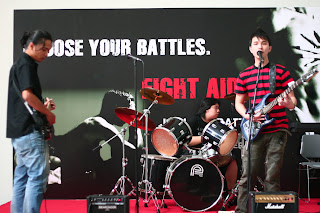
Anyway, after reading my post yesterday, Mr Kevin has requested if the 'KillerJanes' has a demo, so that we could play it before class starts. Sadly, that would be impossible at least right now. The band has not come up and tightened enough songs to even consider recording. However, i have decided to post up the lyrics of "Depress".
Okay for those of you who dont know, i wrote and composed "Depress". With the talents of my dear band mates Isa and John, it has turned from a raw set of chords into something with more feeling and emotion in it. To those who are wondering what song i'm talking about, well its the one we played at Stompaids. Obviously judging from it's name, its not exactly a song you might want to hear if you wake up feeling bright and cheery so thats abit of warning to you guys. Well to prove my point, i once sent a rough accoustic copy to a course mate of mine and guess what she actually cried.
Success!!! you see i am not being mean and cruel but what more can a composer ask for then being able to project an emotion unto someone. To be honest i was sooo happy. HaHa
"Depress"-KillerJanes
Drink a cup of coffee
Vomit out a piece of me
Take my breath away, struggling to be free
Eat the worms alive, swallow all my tears
Hide my most inner thoughts, the ends getting near.....the ends getting near.
I wake up to see the sun
But in my mind it's black(in my mind it' black)
another day has started i want my life back
Take a puff of my cigarette
a second of my life is gone
it does not matter to me anymore
And what i find reliable
will never be the same
the more you give me something
the more ill start to sway
i wake up to see the sun
but in my mind it's black
another day has started i want my life back......
(Repeated Chorus)
Well that was my lyrics, for those who dont like it, well too bad. anyway talking about lyrics making sense out of emotions, i guess thats a good song to play now. Be back again peeps.Adios!!
Anyway, after reading my post yesterday, Mr Kevin has requested if the 'KillerJanes' has a demo, so that we could play it before class starts. Sadly, that would be impossible at least right now. The band has not come up and tightened enough songs to even consider recording. However, i have decided to post up the lyrics of "Depress".
Okay for those of you who dont know, i wrote and composed "Depress". With the talents of my dear band mates Isa and John, it has turned from a raw set of chords into something with more feeling and emotion in it. To those who are wondering what song i'm talking about, well its the one we played at Stompaids. Obviously judging from it's name, its not exactly a song you might want to hear if you wake up feeling bright and cheery so thats abit of warning to you guys. Well to prove my point, i once sent a rough accoustic copy to a course mate of mine and guess what she actually cried.
Success!!! you see i am not being mean and cruel but what more can a composer ask for then being able to project an emotion unto someone. To be honest i was sooo happy. HaHa

"Depress"-KillerJanes
Drink a cup of coffee
Vomit out a piece of me
Take my breath away, struggling to be free
Eat the worms alive, swallow all my tears
Hide my most inner thoughts, the ends getting near.....the ends getting near.
I wake up to see the sun
But in my mind it's black(in my mind it' black)
another day has started i want my life back
Take a puff of my cigarette
a second of my life is gone
it does not matter to me anymore
And what i find reliable
will never be the same
the more you give me something
the more ill start to sway
i wake up to see the sun
but in my mind it's black
another day has started i want my life back......
(Repeated Chorus)
Well that was my lyrics, for those who dont like it, well too bad. anyway talking about lyrics making sense out of emotions, i guess thats a good song to play now. Be back again peeps.Adios!!
Monday, January 15, 2007
First day of school

After about 5 weeks of wonderful holidays, the reluctant students of UB-SIM had to drag themselves back to school. We met our lecturers for this semester and because of grade requirements I, Derek Joseph Sun faced no other choice but to embark on something relatively new to me. BLOGGING!!For those who have no idea as to what to do but are willing to try, rest assured you are not alone. Yours truly shall accompany you on a journey of social and personal reflection. I hope this comes out nicely, its only the first post but what the hell, might as well make full use of it.
So anyway let me start by introducing myself, the name is Derek as those bright people out there would probably realize however, lets make this informal just call me Rek. Yes my english sucks but hey not everyone is perfect innit? I mean lets face it even Professors(Most recognized for their high intellectual level) make mistakes. So whats the deal. We all got something we are good at and at the same time something we are bad at. Well, i could be darn well pessimistic and share with the whole web what im good at.(nothing) or be optimistic and add on the fact that i can play the drums and guitar reasonably well but hey! People being people would probably end up saying that im boasting. What makes people happy??
Yes i play music, a damn well lover of it. Rock is my favourite.Pop? nah not really. heavy metal well although all that nonsensical shouting doesn't amuse me i do have shit loads of respect for the people playing the instruments. Anyway, yes i have a band. 2 actually. One is more or less settled, while the other one well still in the midst of production. Some may ask why 2 bands? Well, since i can jam around like a clown with 2 instruments, i might as well have two bands. One as a guitarist and the other as a drummer.
My main band is called the KillerJanes. Well, now with at least 1 public performance, i can say we are making it productive. Some people may have seen us, cheered for us but deep down cursed us but hey like i said, no ones perfect.
So what else do i occupy my otherwised mentally challenged self with? Counterstrike. oooo i love that game. Manz i being playing that for years and am proud to say, i have improved. i know the game is pretty sadistic with all the shootings and killings but look on the bright side, it sure beats venting your frustrations out on a person physically.
So anyway let me start by introducing myself, the name is Derek as those bright people out there would probably realize however, lets make this informal just call me Rek. Yes my english sucks but hey not everyone is perfect innit? I mean lets face it even Professors(Most recognized for their high intellectual level) make mistakes. So whats the deal. We all got something we are good at and at the same time something we are bad at. Well, i could be darn well pessimistic and share with the whole web what im good at.(nothing) or be optimistic and add on the fact that i can play the drums and guitar reasonably well but hey! People being people would probably end up saying that im boasting. What makes people happy??
Yes i play music, a damn well lover of it. Rock is my favourite.Pop? nah not really. heavy metal well although all that nonsensical shouting doesn't amuse me i do have shit loads of respect for the people playing the instruments. Anyway, yes i have a band. 2 actually. One is more or less settled, while the other one well still in the midst of production. Some may ask why 2 bands? Well, since i can jam around like a clown with 2 instruments, i might as well have two bands. One as a guitarist and the other as a drummer.
My main band is called the KillerJanes. Well, now with at least 1 public performance, i can say we are making it productive. Some people may have seen us, cheered for us but deep down cursed us but hey like i said, no ones perfect.
So what else do i occupy my otherwised mentally challenged self with? Counterstrike. oooo i love that game. Manz i being playing that for years and am proud to say, i have improved. i know the game is pretty sadistic with all the shootings and killings but look on the bright side, it sure beats venting your frustrations out on a person physically.
I guess thats all i got for you on this first blog.The more i type, the more england mistakes ill make, plus the amount of bollocks ill get from people would most certainly dampen my mood to ever write again. So be happy people, accept others for what they are, the world needs a balance of capable people and not so capable people. its people like me that keeps capable people in business. See i'm being optimistic about what i am good at. Nothing.
Subscribe to:
Posts (Atom)
